 Yelp
Yelp Google Reviews
 Home
Home
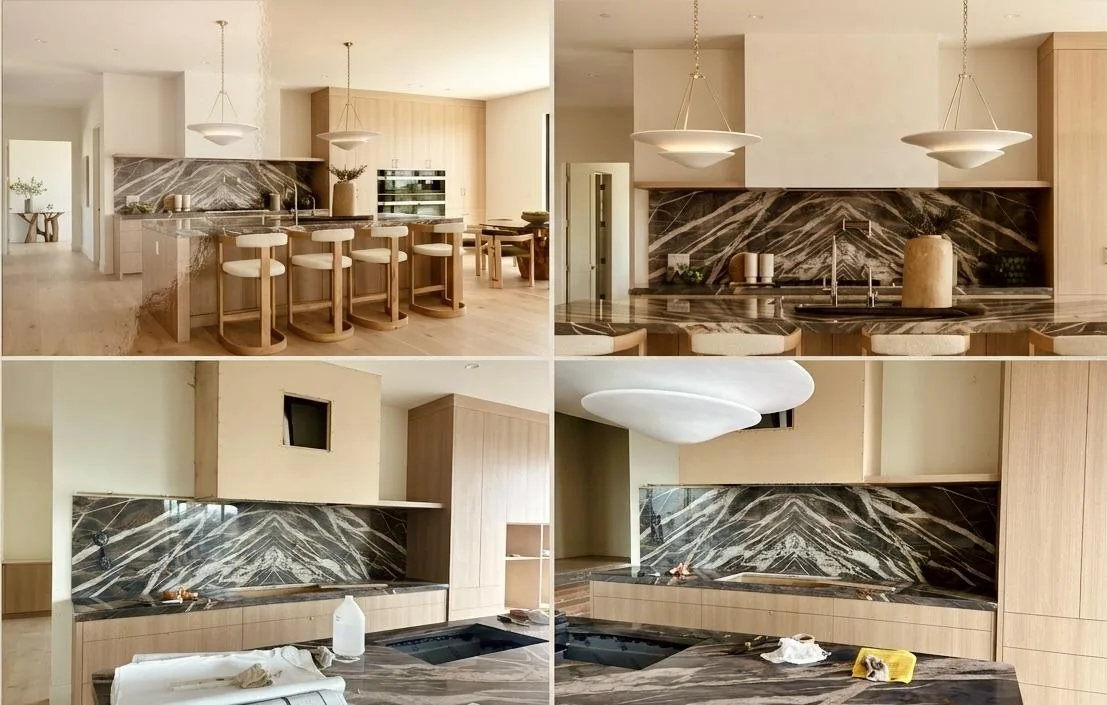
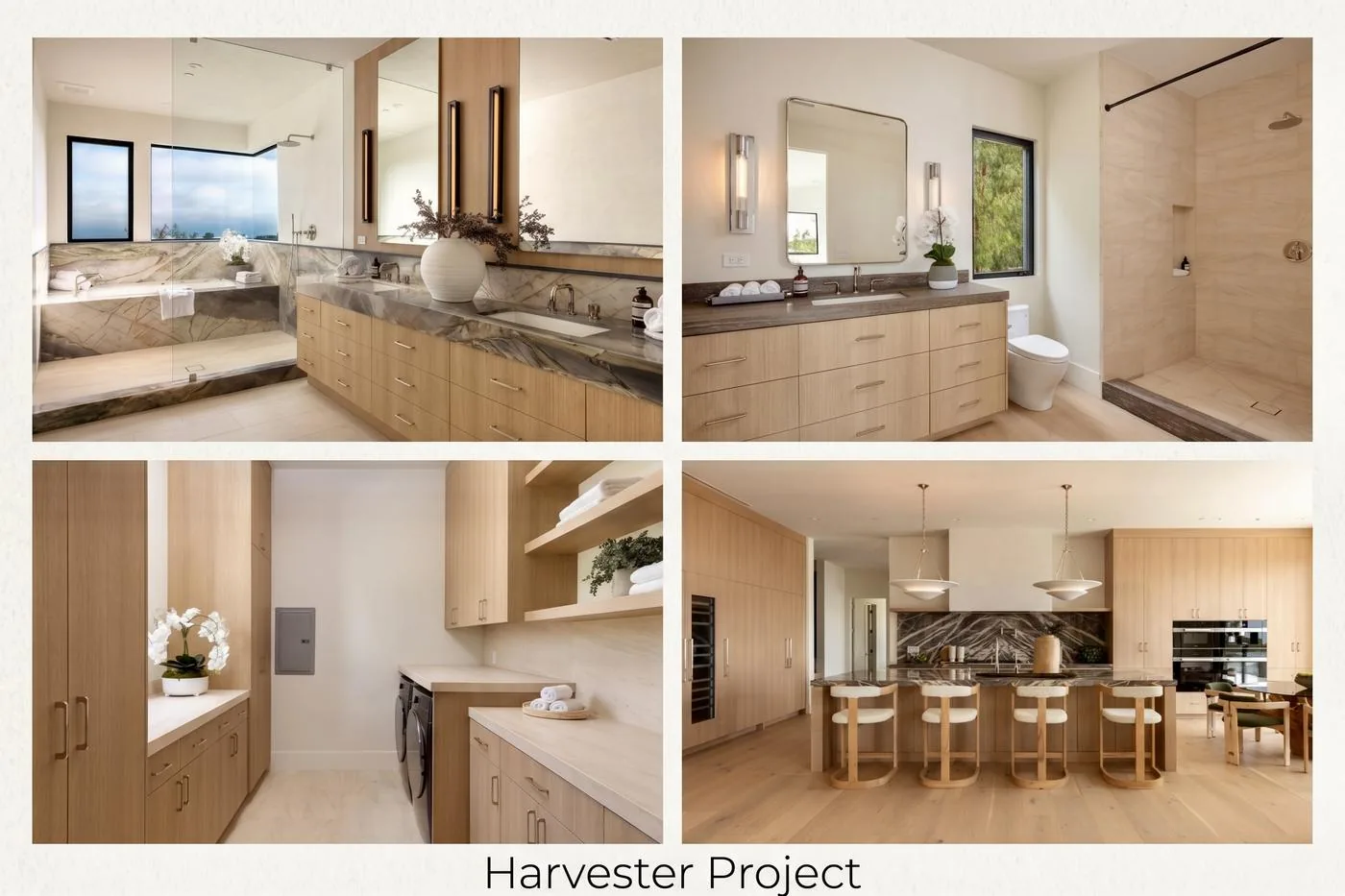
The Harvester project is a custom waterfall island countertop installation for a residential kitchen in Los Angeles. The waterfall detail — where the stone surface continues vertically down the sides of the island in a clean, uninterrupted plane — is one of the more technically demanding applications in residential stone fabrication, and one where the quality of the mitered edge work determines whether the finished result reads as architectural or merely decorative. West Coast Custom Stonework handled slab planning, mitered edge fabrication, and installation through to the finished kitchen.
A waterfall island is the focal point of a kitchen in a way that a standard countertop is not. The vertical stone panels on either side of the island extend the surface material to the floor, creating a continuous stone form that reads as a single composed object rather than a counter sitting on a base. That continuity — the way the stone moves from horizontal to vertical without interruption — is what gives a waterfall island its architectural presence. When the stone carries natural veining or movement, the slab layout determines whether that movement flows through the transition or stops at it.
For the Harvester project, slab planning was carried out before any cuts were made. The relationship between the horizontal top surface and the vertical waterfall panels was mapped so the material's natural character would read coherently across all three planes of the finished island. West Coast Custom Stonework managed the full scope — slab review, fabrication, and installation — as a direct stone fabricator.
Waterfall island fabrication is built around the mitered edge. Where the countertop top meets the vertical waterfall panel, the two pieces are cut at opposing 45-degree angles and joined so the seam is as tight and visually minimal as the material allows. That joint must be planned, cut, and polished in-shop to a standard that holds when the pieces are set on-site. Field measurements establish the exact dimensions each piece requires, and slab layout maps the position of every cut relative to the stone's natural movement before fabrication begins. Seam placement is decided with the mitered joint and the visual logic of the stone both in mind.
Edge polishing, island support conditions, and the relationship between the stone and the base cabinet structure below are all part of the fabrication and installation plan for a waterfall island. Stone at this scale and weight requires correct support to perform well over time — the installation conditions are specified before the stone leaves the shop, not resolved after it arrives on-site. The precision required at every stage is what separates a well-executed waterfall island from one that reads as a close approximation of the intended result.
The finished Harvester kitchen presents a clean, continuous stone island that anchors the room with the kind of presence only natural stone at full scale delivers. The waterfall detail holds the vertical plane without interruption, and the mitered joint reads as a material transition rather than a fabrication seam. The stone surface is durable for daily residential use — the island functions as the working centre of the kitchen and holds its character in both conditions.
This project reflects the fabrication standard West Coast Custom Stonework brings to custom waterfall island countertop installations across Los Angeles and Southern California — careful slab planning, precise mitered edge work, and finished installation that earns the material it uses.
Similar residential work can be found through our Waterfall Island Countertops Los Angeles, Kitchen Countertop Installation Los Angeles, Custom Stone Fabrication Los Angeles, and Premium Countertop Surfaces Los Angeles services.